Voip
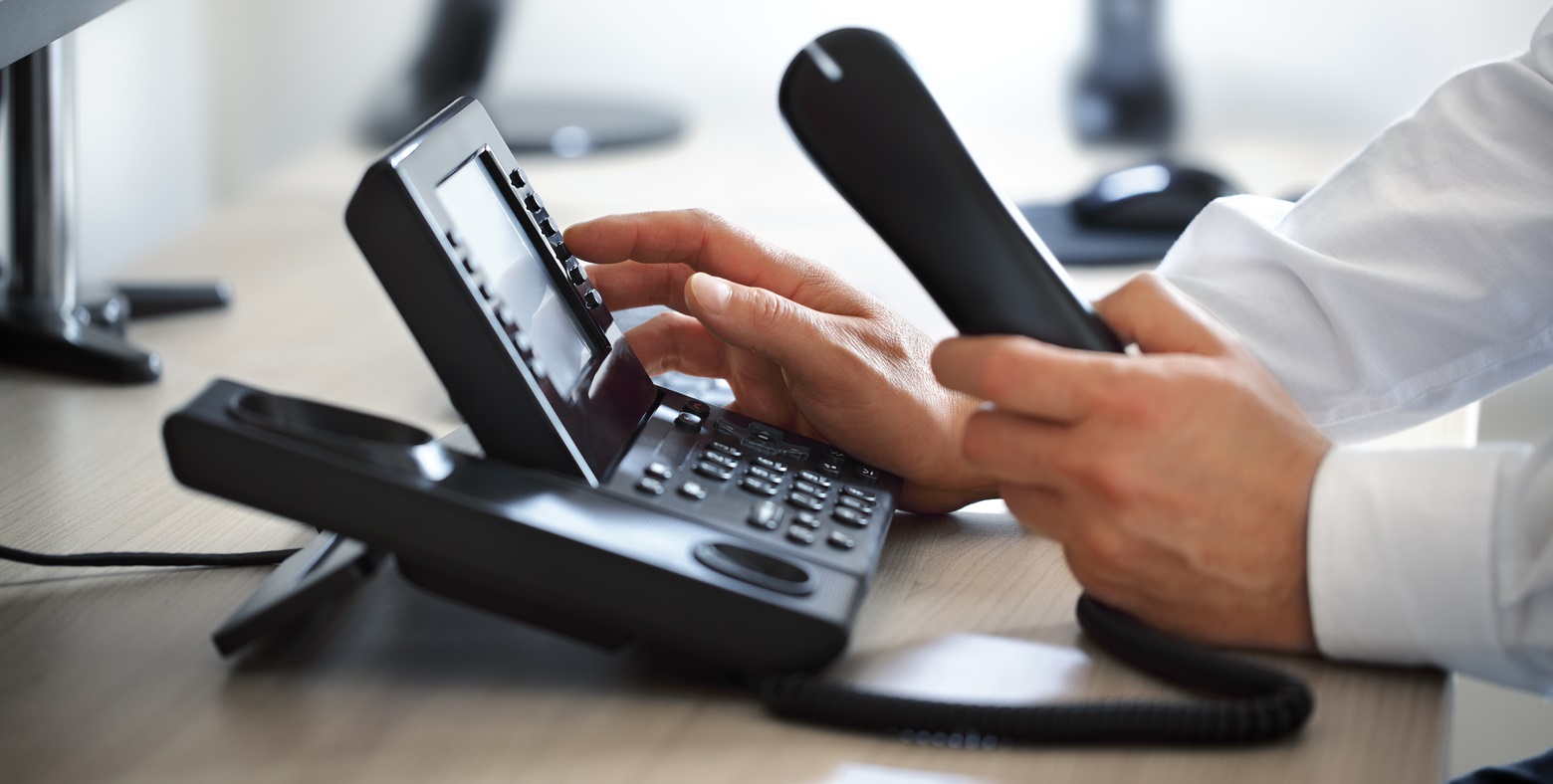
A VoIP phone or IP phone uses voice over IP technologies for placing and transmitting telephone calls over an IP network, such as the Internet, instead of the traditional public switched telephone network (PSTN).[1]
Digital IP-based telephone service uses control protocols such as the Session Initiation Protocol (SIP), Skinny Client Control Protocol (SCCP) or various other proprietary protocols.[2]
Super hockey ball price. VOIP is an acronym for Voice Over Internet Protocol, or in more common terms phone service over the Internet. If you have a reasonable quality Internet connection you can get phone service delivered through your Internet connection instead of from your local phone company. Quality business VoIP phone service, business Internet, business continuity, and business television solutions. Let our VoIP specialists craft the perfect custom package for your business.
Types[edit]
VoIP phones can be simple software-based softphones or purpose-built hardware devices that appear much like an ordinary telephone or a cordless phone. Traditional PSTN phones are used as VoIP phones with analog telephone adapters (ATA).
A VoIP phone or application may have many features an analog phone doesn't support, such as e-mail-like IDs for contacts that may be easier to remember than names or phone numbers, or easy sharing of contact lists among multiple accounts. Generally the features of VoIP phones follow those of Skype and other PC-based phone services, which have richer feature sets but (because they rely on mainstream operating systems' IP support) latency-related audio problems.
A competing view is that as mainstream operating systems become better at voice applications with appropriate Quality of Service (QoS) guarantees and 5G handoff (IEEE 802.21 etc.) becomes available from outdoor wireless carriers, netbooks and smartphones will simply become the dominant interfaces. iPhone, Android and the QNX OS used in 2012-and-later BlackBerry phones are generally capable of VoIP performance even on small battery-charged devices. They also typically support the USB but not Ethernet or Power over Ethernet interfaces, at least as of late 2011. According to this view, the smartphone becomes the dominant VoIP phone because it works both indoors and outdoors and shifts base stations/protocols easily to trade off access costs and call clarity and other factors personal to the user, and the PoE/USB VoIP phone is thus the transitional device.
Components and software[edit]
A VoIP telephone consist of the hardware and software components. The software requires standard networking components such as a TCP/IP network stack, client implementation for DHCP, and the Domain Name System (DNS).In addition, a VoIP signalling protocol stack, such as for the Session Initiation Protocol (SIP), H.323, Skinny Call Control Protocol (Cisco), and Skype, is needed.For media streams, the Real-time Transport Protocol (RTP) is used in most VoIP systems. For voice and media encoding, a variety of coders are available, such as for audio: G.711, GSM, iLBC, Speex, G.729, G.722, G.722.2 (AMR-WB), other audio codecs, and for video H.263, H.263+, H.264. User interface software controls the operation of the hardware components, and may respond to user actions with messages to a display screen.
STUN client[edit]
To enable the VoIP communications, the SIP/RTP packets should be utilised and STUN client would be the key component for VoIP communications with management of the SIP/RTP packets. A Session Traversal Utilities for NAT (STUN) client is used on some SIP-based VoIP phones as firewalls on network interface sometimes block SIP/RTP packets. Some special mechanism is required in this case to enable routing of SIP packets from one network to other. STUN is used in some of the sip phones to enable the SIP/RTP packets to cross boundaries of two different IP networks. A packet becomes unroutable between two sip elements if one of the networks uses private IP address range and other is in public IP address range. Stun is a mechanism to enable this border traversal. There are alternate mechanisms for traversal of NAT, STUN is just one of them. STUN or any other NAT traversal mechanism is not required when the two SIP phones connecting are routable from each other and no firewall exists in between.
DHCP client[edit]
DHCP client software simplifies connection of a device to an IP network. Swordigo evernight forest. The software automatically configures the network and VoIP service parameters.
Hardware[edit]
The overall hardware may look like a telephone or mobile phone. A VoIP phone has the following hardware components
- Speakerphone and a microphone
- Keypad or touchpad to enter phone number and text (not used for ATAs)
- Display hardware to feedback user input and show caller-id/messages (not used for ATAs)
- General-purpose macro processor (GPP) to process application messages
- A voice engine or a digital signal processor (DSP) to process RTP messages. Some IC manufacturers provides GPP and DSP in single chip
- AD and DA converters: To convert voice to digital data and vice versa
- Ethernet or wireless network hardware to send and receive messages on data network
- Power source - a battery or DC/AC source; some VoIP phones receive electricity from Power over Ethernet
- Some VoIP phones include an RJ-11 port to connect the phone to the PSTN
Other devices[edit]
There are several Wi-Fi enabled mobile phones and PDAs that have pre-installed SIP client software, or are capable of running IP telephony clients, including most smartphones.
Analog telephone adapters provide an interface for traditional analog telephones to a voice-over-IP network. They connect to the Internet or local area network using an Ethernet port and have jacks that provide a standard RJ11interface for an analog local loop.
Another type of gateway device acts as a simple GSM base station and regular mobile phones can connect to this and make VoIP calls. While a license is required to run one of these in most countries these can be useful on ships or remote areas where a low-powered gateway transmitting on unused frequencies is likely to go unnoticed.
Some VoIP phones also support PSTN phone lines directly.
Common functionality and features[edit]
- Caller ID display
- Call transfer and call hold
- Dialing using name/ID (differs from speed dial in that no number is stored on the client)
- Locally stored and network-based directories
- Conference calling and multiparty calls
- Call blocking feature.
- Support for multiple VoIP accounts – the phone may register with more than one VoIP server/provider.
- Accounts are usually set and memorized on the phone itself. A more sophisticated feature is dynamic download of account settings, also known as 'extension mobility'. This feature allows settings stored on a server to be downloaded to the phone, based on user login. The user logs into the phone and that phone becomes the user's extension. This feature requires both a client (phone) and a server, usually in the context of unif[3]ied communications systems.
- Secure encrypted communications
Technology problems[edit]
- Requires Internet access to make calls outside the local area network (LAN) unless a compatible local private branch exchange (PBX) is available to handle calls to and from outside lines.
- VoIP phones and the routers depend on mains electricity for power, unlike PSTN phones, which are supplied with power from the telephone exchange. However, this can be mitigated by installing a UPS. The Power over Ethernet interface simplifies this immensely since power can be 'injected' at any connector (especially in passive mode where all devices are drawing the same voltage) or at the router. This is a major reason the dominant call center and PBX VoIP systems rely on PoE exclusively, but UPS and PoE are only helpful if the upstream Internet provider also has reliable backup power.
- IP networks, particularly residential Internet connections are easily congested. This can cause poorer voice quality or the call to be dropped completely.
- VoIP phones, like other network devices can be subjected to denial-of-service attacks as well as other attacks especially if the device is given a public IP address.[3] This is especially significant as a problem with wireless devices using 802.11 protocols.
- Due to the latency induced by protocol overhead and other factors they do not work as well on satellite Internet, analog cell ('edge' networks) and other high-latency Internet connections. Extremely latency sensitive applications (music, remote device control) as of 2012 simply cannot exploit VoIP protocols.
- Proprietary vendors such as Skype and Google Voice focus on improving call quality between their own users to grow their user base[citation needed], which to some degree competes and conflicts with the goal of better connections from Skype to Google Voice, or from either to the existing PSTN and cellular networks. The best codecs tend to be proprietary and not licensed to competitors, retarding the growth of the industry and causing incompatibility.
- Various schemes exist to allow one Internet telephony user to talk to another entirely via Internet and without incurring the cost of a PSTN call. Some are based on SIP addresses, some on proprietary protocol such as webcam or Internet chat applications. While it's not uncommon for two clients of the same voice over IP provider to talk to each other online for free, the various Internet telephony applications often do not talk directly to each other - requiring calls be gated to PSTN and back at full toll rates.
- Some Internet-to-Internet calling schemes use non-numeric names for users, gateway or provider names. Any character which is valid in an e-mail address could be used in a SIP address, for instance, but a VoIP phone with a standard telephone keypad can only dial numbers. Various workarounds (such as e164.arpa or SIP Broker-like directories) exist to associate names to numbers.
See also[edit]
| Wikimedia Commons has media related to VoIP telephones. |
- IP Multimedia Subsystem (IMS)
References[edit]
- ^Chris Yackulic. 'Why Your Small Business Needs a VoIP Phone System'. Android Headlines.
- ^SBWire. 'Internet Protocol (IP) Telephony Market to 2022: Top Companies, Trends, Deployment, Growth Factors Details for Business Development'. Digital Journal.
- ^ abVoIP — Vulnerability over Internet Protocol
Introduction
VOIP is an acronym for Voice Over Internet Protocol, or in more common terms phone service over the Internet.
If you have a reasonable quality Internet connection you can get phone service delivered through your Internet connection instead of from your local phone company.
Some people use VOIP in addition to their traditional phone service, since VOIP service providers usually offer lower rates than traditional phone companies, but sometimes doesn’t offer 911 service, phone directory listings, 411 service, or other common phone services. While many VoIP providers offer these services, consistent industry-wide means of offering these are still developing.
How does VOIP work?
A way is required to turn analog phone signals into digital signals that can be sent over the Internet.
This function can either be included into the phone itself (See: VOIP Phones) or in a separate box like an ATA .
VOIP Using an ATA
Ordinary Phone —- ATA —- Ethernet —- Router —- Internet —- VOIP Service Provider
VOIP using an IP Phone
IP Phone —– Ethernet —– Router —- Internet —- VOIP Service Provider
VOIP connecting directly
It is also possible to bypass a VOIP Service Provider and directly connect to another VOIP user. However, if the VOIP devices are behind NAT routers, there may be problems with this approach.
IP Phone —– Ethernet —– Router —- Internet —- Router —- Ethernet —- IP Phone
Applications using VOIP
Traditional telephony applications, such as outbound call center applications and inbound IVR applications, normally can be run on VOIP.
There are a number of VoIP phone systems available on the market including, one example being 3CX which is a software-based VoIP PBX for Windows, Linux and the cloud. For a comprehensive list of solutions visit VoIP PBX and Servers.
Why use VOIP?
There are two major reasons to use VOIP
- Lower Cost
- Increased functionality
Lower Cost
In general phone service via VOIP costs less than equivalent service from traditional sources. This is largely a function of traditional phone services either being monopolies or government entities. There are also some cost savings due to using a single network to carry voice and data. This is especially true when users have existing under-utilized network capacity that they can use for VOIP without any additional costs.
In the most extreme case, users see VOIP phone calls (even international) as FREE. While there is a cost for their Internet service, using VOIP over this service may not involve any extra charges, so the users view the calls as free. There are a number of services that have sprung up to facilitate this type of “free” VOIP call. Examples are: Free World Dialup and Skype for a more complete list see: VOIP Service Providers
Increased Functionality
VOIP makes easy some things that are difficult to impossible with traditional phone networks.
- Incoming phone calls are automatically routed to your VOIP phone where ever you plug it into the network. Take your VOIP phone with you on a trip, and anywhere you connect it to the Internet, you can receive your incoming calls.
- Call center agents using VOIP phones can easily work from anywhere with a good Internet connection.
See also
- A White Paper with explanations that contrast how PSTN and VoIP work.
- How to use VoIP:6 ways to use VoIP
- VoIP Review – Read customer reviews for various VoIP service providers
- What is VoIP? – A guide for beginners starting to work with voice
- Implementing VoIP Services Into a Business The implementation of VoIP services
- VOIP Books recommended by Voip-info.org
- What is SIP
Books
If you use one of the Amazon links below to purchase a book voip-info.org will benefit.
This list is loosely in order starting with non-technical overviews and moving on to comprehensive technical references.
VOIP for Dummies, by Timothy V. Kelly
- A non-technical introduction to VOIP
Switching to VOIP, by Ted Wallingford
- An introduction that assumes some basic knowledge of computer networking
If you would like to recommend a VOIP book, please visit VOIP Books